Healthcare facilities and security services
Allied Force Group supports healthcare estates where cleaning standards, infection control and uninterrupted plant operation are clinical concerns rather than housekeeping. Work is planned around clinical activity, access is controlled and evidenced, and statutory tasks such as water hygiene are recorded to a standard that stands up to inspection.
Healthcare estates run continuously and are audited constantly. We work to written specifications for clinical and non-clinical areas, with sign-off captured at the point of work rather than reconstructed later.
Specification-led cleaning
Frequencies and methods agreed by area type, with records kept against each task.
Controlled access
Inductions, escorting and access arrangements agreed with your team before attendance.
Water and life safety
Legionella coordination, TMV servicing and flushing regimes kept live and evidenced.
How a healthcare estate is covered
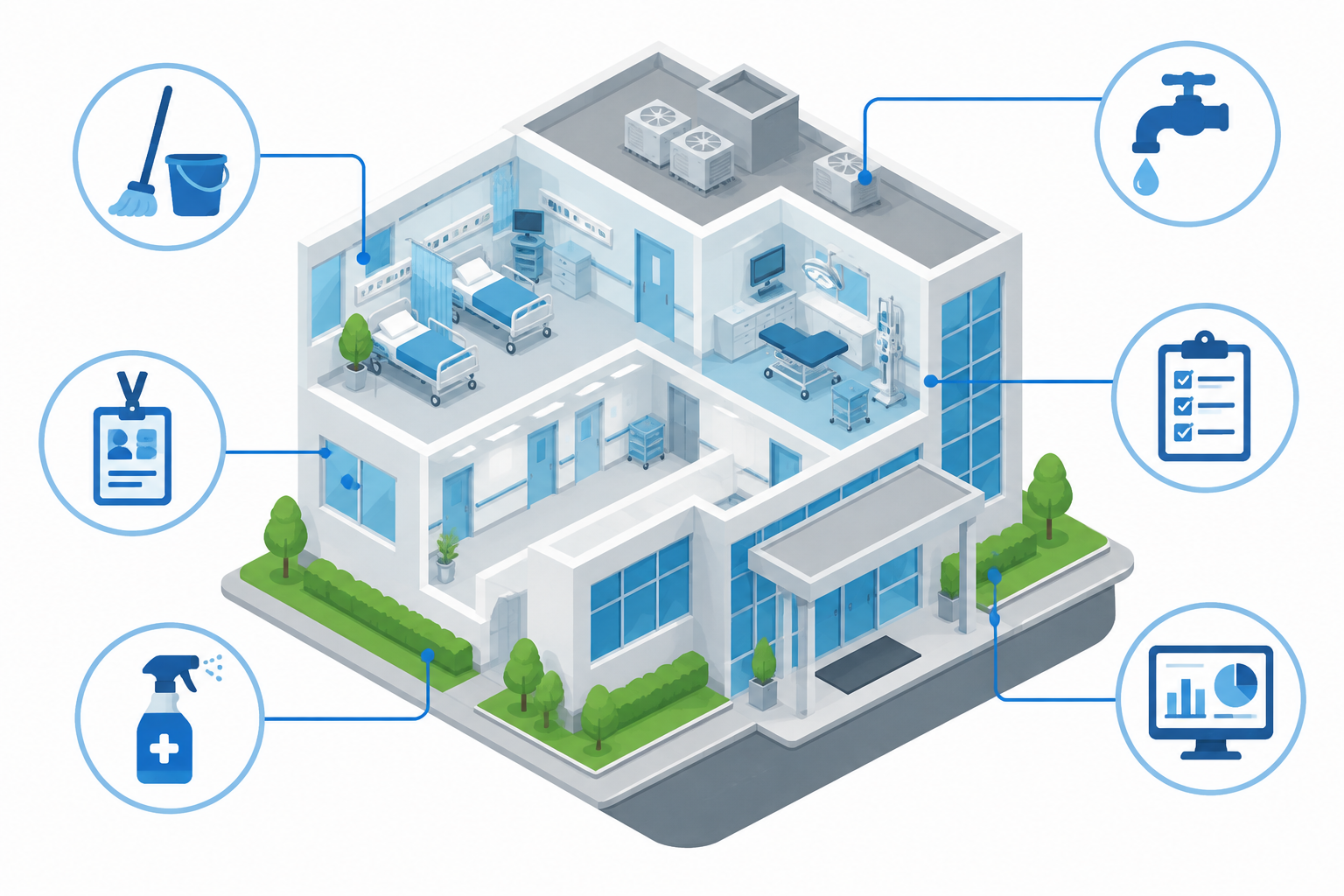
Clinical and non-clinical areas are treated separately, with methods, frequencies and sign-off written down for each area type.
- 01Clinical area cleaning
- 02Non-clinical and public areas
- 03Water hygiene coordination
- 04Controlled access and escorting
- 05Planned maintenance
- 06Reactive attendance
- 07Waste segregation support
- 08Audit-ready records
Specification before frequency
Each area type gets an agreed method, product set and frequency before any schedule is built. That keeps cleaning defensible under audit and makes it clear where a change in clinical use should change the regime.
Attending a live estate
Healthcare sites do not close. Inductions, escorting and permitted working hours are agreed with your team in advance, and attendance is planned around clinical activity rather than around our own convenience.
Water and life safety
Legionella risk assessment actions, flushing and temperature regimes, TMV servicing and sampling are coordinated on a written scheme of control, structured against ACOP L8 and HSG274 guidance. Scope and delivery arrangements for specialist work are confirmed following a site review.
- Cleaning records held against each area type
- Flushing, temperature and TMV servicing logs
- PPM and reactive maintenance history from CAFM
- Remedial actions tracked to closure
Healthcare facilities questions
How does cleaning differ in a healthcare setting?
Cleaning in clinical areas is specified by area risk, with defined methods, colour-coded equipment and frequencies that reflect infection-control requirements rather than general office standards, and with audit evidence kept for each area.
How is work planned around clinical activity?
Tasks are scheduled around lists, occupancy and access restrictions, with permits and escorts arranged where areas cannot simply be entered. Disruptive work is booked into agreed windows.
What compliance evidence is produced?
Statutory tasks including water hygiene under ACOP L8, fire and life-safety support and electrical testing are tracked with logbook entries, so evidence can be produced at inspection rather than reconstructed.
Can security be included on a healthcare site?
Yes. Reception security, patrols and access control can be delivered alongside cleaning and engineering by the same coordinated team. The scope and delivery arrangements for a specific site are confirmed following a site review.